Earn the Commute: Why RTO Mandates Are Failing and How to Fix Them
Return-to-office mandates are driving attendance but not engagement. Dr. Monica Browning Mitchell’s research reveals why companies must earn the commute and design offices that actually improve performance.


Across professional life, a pattern is emerging. Post-pandemic office attendance is creeping up, but employee engagement isn't rising with it.
Around 70% of companies now have formal return-to-office policies in place as business leaders mandate presence and synchronous work. But employee engagement is dropping sharply. Studies show 64% of US workers are highly engaged, compared to 88% the year before.
The gap between attendance and engagement is widening, and many CEOs are struggling to understand why.
Dr. Monica Browning Mitchell is offering one of the clearest explanations yet. A former Fortune 50 executive with more than three decades of leadership experience at AT&T, she recently completed her doctoral research on the impact of return-to-office mandates across the Fortune 500.
Mitchell's research points to a simple but uncomfortable truth. The problem with return-to-office mandates isn't that employees don't want to come back. It's that their employers haven't given them a good enough reason to.
Are your office days driving performance or just attendance?
See how flexible workspace helps teams come together with purpose.
Employees understand that companies can require presence. What has changed is what they expect in return. This new value exchange is the currency driving worker loyalty, higher collaboration rates, employee engagement, and satisfaction.
For leaders, getting this right isn't just about keeping employees happy. It allows them to unlock the full value of the workplace itself, whether that's a central HQ, coworking space, regional hub, or client-facing suite.
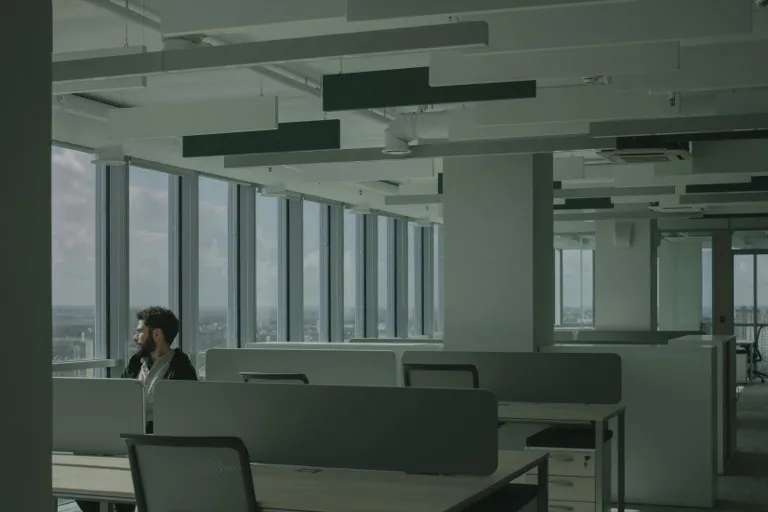
Offices are one of the highest fixed costs on the balance sheet, yet in many organizations, they remain underutilized, poorly coordinated, and misaligned with how teams actually work. Leaders are paying for space that sits empty three days a week, or investing in layouts and locations that don't support the moments that matter most. When the value exchange is broken, employees underperform, but so does the workspace. It becomes a sunk cost rather than a performance driver.
However, when the office is designed intentionally, the opposite happens. Space is used when it creates the most impact. Teams come together with purpose. Managers spend less time coordinating logistics and more time leading. And organizations stop paying for presence and start investing in performance.
As Mitchell puts it, "Employees fundamentally understand that the boss has the right to say, 'I need you in the office.' But their attitude when they get there will be determined by the environment you provide."
Presence Doesn't Mean Performance: The Great Divergence
For decades, performance and presence were treated as one and the same. Your workers are in the office with their heads down? They're working hard. Your staff aren't physically present? They're likely not working.
That assumption doesn't hold anymore.
The pandemic demonstrated at scale that productivity isn't dependent on proximity. Research from Stanford University shows hybrid workers perform at parity with in-office teams, while data from Microsoft tracking over 60,000 employees found remote workers logging approximately 10% more working hours, often repurposing time previously lost to commuting.
As Dr. Mitchell explains, employees around the world have proved they can work well from home. They have their own equipment they know how to use, they can be productive without the friction of commuting, and they can complete tasks without the social burden.
This changes the parameters of what the office can offer.

Before 2020, the office didn't have to justify its role. But now the office is no longer the default setting for effective work. It's just one option among several, and it is being held up in comparison to an environment where employees already know they can perform effectively.
Since the pandemic, employee presence and employee performance have cleaved. This is where many return-to-office strategies break down.
Employees are no longer asking, "Do I have to go in?" They're asking, "Will I work better if I do?" Because once performance is decoupled from presence, the office has to justify its role all over again.
Attendance Without Engagement: The Compliance Risk
Return-to-office mandates can drive attendance, but they can't guarantee engagement. This means a dangerous trend is emerging.
Faced with a rise in policies on central HQ attendance, employees obediently show up. They are badge swiping, logging in, and complying with policy. But as Mitchell's research makes clear, compliance is not the same as commitment.
As Dr. Mitchell puts it, "you might get workers to the office, but you're not going to get their best day."
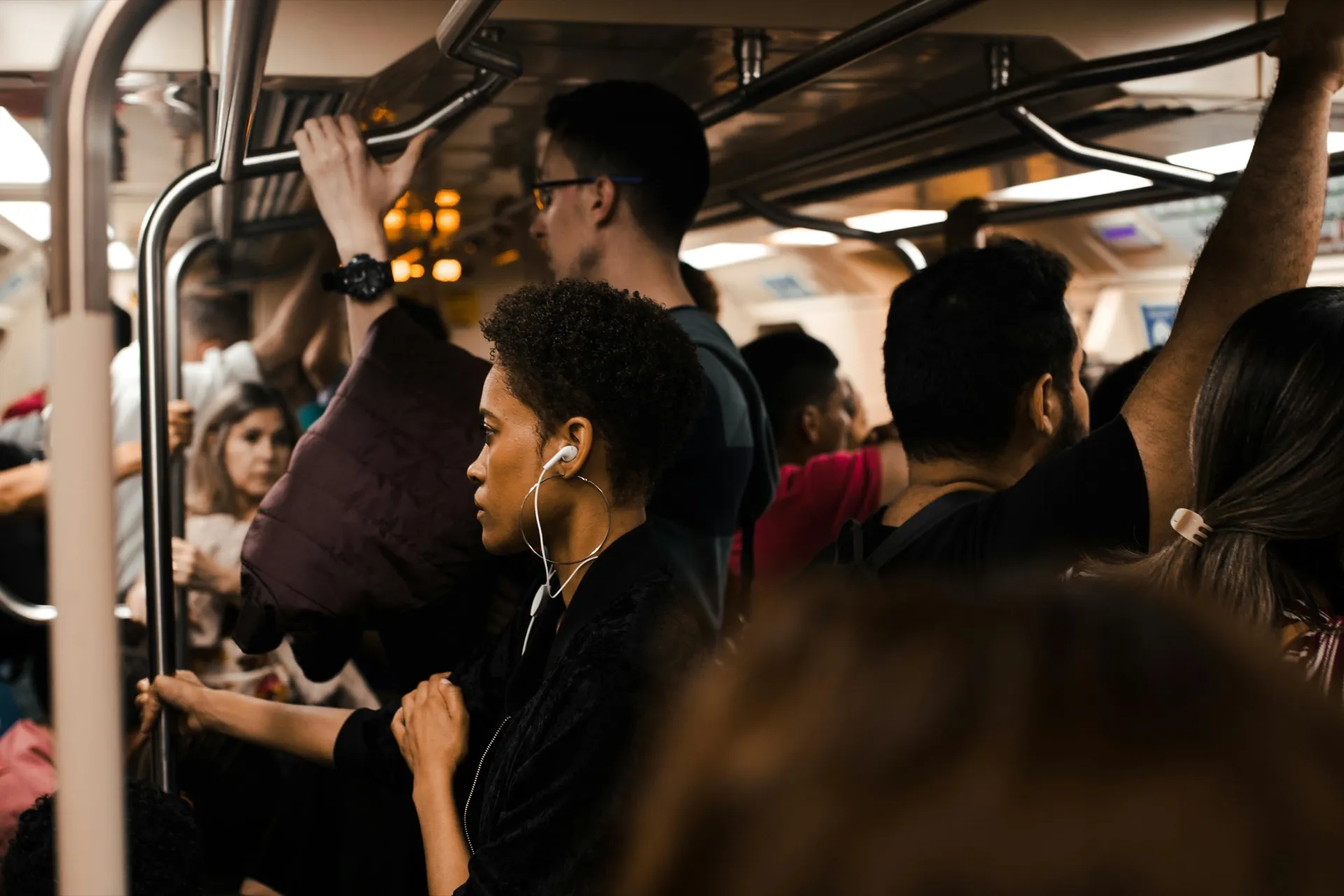
Disengagement isn't driven by the mandate itself. It's driven by misalignment. People come in on days when their teams aren't there, or they arrive and there isn't enough space for them. They commute in for work that could have been done better at home. The intent behind being in the office and the reality of the day don't match.
Dr. Mitchell raises a common phenomenon: 'the team that you're supposed to collaborate with isn't in the office on your allocated day, so you end up in a conference room on a Zoom call that you could have been doing at home.'
In other words, the task doesn't line up with the mandated work environment, so the system creates friction without adding value.
Some key hallmarks of attendance without engagement? Work becomes more transactional. Time is filled, but not used well. Managers absorb a growing coordination load, spending hours each week simply aligning schedules and spaces instead of driving outcomes.
At the same time, productivity theater begins. Around 64% of employees admit to maintaining the appearance of activity by being visible and communicative, without actually producing meaningful output.
This is the compliance risk: not that people won't come in, but that when they do, the way work is structured tanks high-value output.

The New Value Exchange: Magnets, Not Mandates
Dr. Mitchell frames the crisis at the heart of modern work through work adjustment theory.
At its core, work is an exchange. Employees provide labor, time, and commitment in return for pay, opportunity, and support. When employers change the conditions of that exchange, employees expect something to change on their side, too.
That is where return-to-office mandates are breaking down.
In recent years, employers have reintroduced a requirement to be in the office, sometimes four or five days a week, but they have not meaningfully updated what they offer alongside it. Employees are being asked to absorb the cost of that change without an increase in value.
And those costs are significant:
They are financial. Commuting alone now costs the average US worker over $2,000 a year, before factoring in parking, meals, and childcare, with far higher costs in major cities.
They are temporal. One to two hours a day lost to travel, time that was previously reinvested into work, rest, wellness activities, or family life.
They are logistical. Coordinating school runs, caregiving, and daily routines around fixed schedules that were previously flexible.
They are operational. Leaving behind environments where they can focus, with better equipment, fewer interruptions, and more control over how and when they work.
In this new value exchange, employees are asking the simple question: what do I get in return?
That return is not abstract. Employees need their office attendance to hand them back clear improvements in how they work and progress. Better collaboration that only happens in person. Coordination that makes their time more effective. Access to leadership, mentorship, and growth that cannot be replicated remotely.
Without these returns, the equation doesn't hold. Presence becomes a cost rather than a benefit, and working from the office becomes an obligation to endure, as opposed to a value-adding experience that improves performance.
That is why so many mandates are stalling, because they rely on authority rather than value. And in a system where employees have already proven they can perform without the office, value is the only lever that works.
During a recent podcast with Monica, Dr. Alise Cortez aptly coined a new adage for employers: "you have to earn the commute."
The organizations that understand this are designing for pull rather than push. They treat the office as something that must justify itself, not something whose value is assumed.
Make in-person days worth the trip
Give teams access to workspaces designed for the collaboration that matters most.
How to Earn the Commute: Design Rather Than Dictate
Too many organizations are still treating return to office as a policy puzzle to be solved. They ask how many days a week they should require, whether Monday or Tuesday is a better office day, and what happens when employees don't comply.
But Dr. Mitchell's research shows this isn't a policy problem, it's a design flaw. Trust isn't lost because of the mandate itself, but when the reality of the office experience doesn't match the reason given for it.
As Mitchell points out, employees are told the office is for collaboration, but arrive to find their teams are not there. They are told it will improve performance, but experience broken monitor screens and slow check-in processes when they get there.
Over time, that disconnect creates a growing gap between what's said and what's experienced. This is where disengagement and mistrust begin.
So how can flexible-first businesses earn the commute and make sure their workspaces actually add value?
Design for coordination, not attendance
Getting people into the office shouldn't be the goal. Instead, focus on getting the right people together at the right time in a setting that enables their best work. Leaders must align team schedules around meaningful collaboration, not arbitrary days. If people show up and their team isn't even there, the whole exercise has already failed.
Make the office outperform other work environments
Most employees already have environments where they can focus at home. As Dr. Mitchell explains, many employees are returning to offices that are actually inferior to their home setup. The chairs are broken, there aren't enough desks, the WiFi crashes, or there is nowhere to take a call. To earn the commute, the office must offer a clear improvement on the home office. That means reliable technology, spaces for deep collaboration, and environments designed around how your organization's work actually happens.
Deliver clear return on time and cost
The commute is now a visible trade-off. If employees are giving up time, money, and flexibility, they expect something in return. That return should be tangible. Make sure the office unlocks faster decisions, better collaboration, access to leadership, and real development opportunities. Mitchell calls this the "return on investment" for what workers put into their commute.
Replace control with trust and intention
Mandates signal control, but intelligent design signals trust. Leaders must move away from tracking attendance and instead focus on creating moments that matter and empowering teams with autonomy. Offer departmental choice over office days, trust employees to meet quotas rather than enforcing them, and structure flexible work policies around actual lived experiences. Mitchell is clear that employees aren't against mandates themselves, but without value, they'll just comply for compliance sake, without the engagement, enthusiasm, and emotional commitment that creates long-term value and culture.
Make the Office Matter Again
Dr. Monica Mitchell's research reframes the return-to-office debate entirely. It's not a question of whether employers can require presence, but whether that presence creates value for employees and for the organization as a whole.
That is where most strategies are failing.
In 2026, attendance is easy to mandate. What is difficult is ensuring that time in the office actually improves how work gets done. Without that, presence becomes a cost without a return for both employees and the business.
The consequences of that disconnect are not loud or immediate. Instead, they show up as a more subtle and more dangerous decline in engagement, loyalty, and retention. What looks like compliance on the surface becomes inefficiency over time. That compounds into slower execution, weaker collaboration, and a steady erosion of trust between leadership and the workforce.
But when organizations get it right, the upside is significant. The office becomes a place where work accelerates rather than stalls. Teams come together with purpose. Decisions are made faster. Learning happens more naturally. Early-career employees gain exposure. Managers spend less time managing logistics and more time driving outcomes.
Most importantly, the workplace begins to justify its cost because space can finally be used intentionally, and attendance aligns with actual impact. In other words, the commute is earned because the office shifts from a fixed overhead to a performance asset.
Design Workspaces That Earn the Commute
Give your teams access to 800+ coworking spaces, meeting rooms, and flexible workspaces that make in-person days worth the trip.
- ✓ On-demand access to 800+ workspaces across major cities
- ✓ Coordinate team days in spaces designed for collaboration
- ✓ Replace fixed overhead with flexible, usage-based workspace