
The Hidden Costs of a Bad Remote Policy: The Unseen P&L Behind "Work from Anywhere"
In 2025, remote work might be a universal expectation but it's not a universal remedy. Too many CEOs see their remote offering as a money saver, but fail to account for dangerous hidden costs.


The 4% Club: Why Hybrid Work Policy Still Fails Most Companies
Did you know that just 4% of companies have an actual policy governing their hybrid work arrangements? Not just an offer on their website for new hires.
Hybrid Work as Strategic Infrastructure: Moving Beyond Perks and Passes
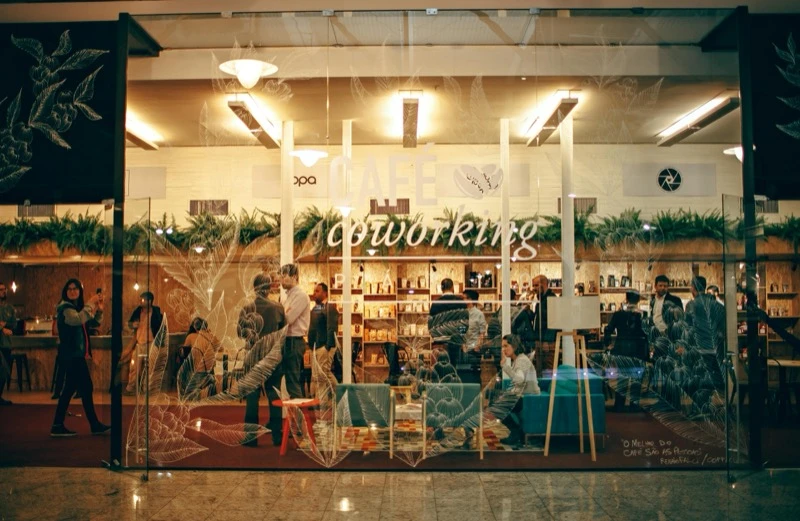
Are you joining the "third space" movement? The death of the traditional office has created a need for a place to gather that's not the home or the office.


Utilization Is the New Rent: Why Real Estate Strategy Needs a Data Overhaul for 2026
Traditional real estate metrics are failing hybrid companies. Learn why utilization is the new rent and how leaders are rebuilding office strategy.

Beyond HQ vs. No HQ: Why Culture Strategy Now Starts With Workspace Design
In the hybrid era, culture is shaped less by policies and more by space. Learn why real estate strategy is now central to culture and retention.


Why Your Workspace Strategy Could Win You The Talent War In 2026
Retention in 2026 is a fiscal strategy, not just an HR one. Discover how a structured hybrid workspace strategy can stop the "Talent Exodus" and boost loyalty.

The Unsung Heroes of Hybrid Work: Why Office Managers are Your Secret Weapon in 2026
Office managers are the architects of the hybrid era. Discover why the OM role is more strategic than ever in 2026 and how to support your unsung heroes.

Not A Return But A Reset: Expert Predictions for Hybrid Work in 2026
Stop the "return" and start the reset. Discover Croissant's expert predictions for hybrid work in 2026, from RTO mandate failures to outcome-based management.

Product Teams and the Rise of the Third Space: The Canary in the Coal Mine for Hybrid Work
Discover why product teams are the ultimate litmus test for hybrid work success and how their outcome-over-proximity mindset provides a blueprint for the 2026 workplace.
The Middle Manager Problem: Hybrid Work's Least-Discussed Failure Point
Middle managers are the "shock absorbers" of hybrid work. Discover why your flexible model is leaking value and how to empower your most critical team layer.

Hybrid Inequality: How Flexible Work Quietly Creates Two Classes of Employees
Is your hybrid model creating a "second-class" employee? Discover how poorly designed flexible work fuels inequality, proximity bias, and a hidden hierarchy.

Onboarding Without an Office: How to Build Belonging in the New Workplace Landscape
Learn how to onboard employees in a hybrid workplace, build belonging without a central office, and reduce coordination, culture, and retention risks for distributed teams.

A Reckoning for the Office Industry: The Predictability Gap Facing Office Managers Worldwide
Modern work is volatile, but office infrastructure is fixed. Discover why office managers are stuck in the middle and how a new workspace layer is closing the predictability gap.

What Does a Conference Room Cost Per Hour? City Benchmarks From the Croissant Conference Room Price Index
Hourly conference room rates by city, country, neighborhood and room size from the Croissant Conference Room Price Index, with the rates other platforms quote for the same cities.

How to Book a Conference Room Without a Membership
Booking a conference room as a non-member: the three routes, hourly rates by city from the Croissant Conference Room Price Index, what is included, and what to check before you pay.

Venue Marketplaces, Room-Booking Software, or a Workspace Network? The Three Categories Teams Confuse
Venue marketplaces, room-booking software and workspace networks do different jobs. How the three categories differ, what the Croissant Workspace Index shows about each, and how to choose.
What Is Hybrid Work Infrastructure? The Four Layers, and How to Tell If You Have Them
A definition of hybrid work infrastructure and its four layers: a bookable network, policy and budget, central billing, and usage data, with Croissant program data on what each layer changes.

Day Offices and Hourly Desks: What You Get, and What They Cost
What a day office and an hourly desk include and cost, with median day rates by city from Croissant market benchmarks and hourly rates from the Croissant Conference Room Price Index.


Is Your Workspace Program Working? What 6,138 Company-Months Say Good Looks Like
Croissant tracked workspace programs across 6,138 company-months. Programs do not fade, they switch off: the share running any bookings falls from 82.6% to 31.8%, while participation when active barely moves and onboarding predicts nothing.

Workspace Flexibility Without Losing Control of Spend: The Risk Is Idle Seats, Not Power Users
Croissant analyzed tens of thousands of company workspace bookings. A median 15.4% of active employees drive half of all bookings and half of all spend, while 68.1% of company-months saw no bookings at all.

How Distributed Companies Actually Manage Workspace Across Multiple Cities
Croissant data on vendor sprawl: companies active in 21 or more markets use a median of 252 venues and 183 workspace operators. Venue count grows 1.7 times faster than market count.

Coworking, Private Office, or Lease? How to Match Workspace to Actual Demand
Croissant tracked 883 company-city relationships. Only 14% ever reach sustained weekly demand, and markets with 3 or more booking days and 2 or more bookers in the first 90 days reach it at 45.6% versus 5.1%.

One App for Every Workspace: How Distributed Teams Book Desks, Rooms, and Offices
What a single workspace booking app for distributed teams must cover: self-serve booking, budgets, policies, admin controls, and visibility, grounded in real usage data.

Deskpass vs WeWork All Access for Teams: The 2026 Comparison
Deskpass vs WeWork All Access for team plans: network coverage, pricing models, admin controls, and usage reporting compared, with real utilization data.

How to Scale Workspace Across Multiple Cities Without Opening Offices Everywhere
Croissant analyzed 949 company-market relationships. Only 9% of new company-city markets reach weekly demand within a year. What that means for multi-city workspace strategy.

When Does a City Deserve an Office? What 883 Company-City Markets Reveal
Croissant tracked 883 company-city markets for 12 months. Only 9.1% reached weekly demand. The data-backed thresholds for deciding when a city justifies an office.

How Often Do People Actually Need Workspace? 19,759 Employee-Months of Data
Croissant analyzed 19,759 employee-months of workspace usage. The median employee books 2 days in an active month and 5 days a year. What that means for per-seat pricing.

Third Spaces: What They Are and Why They Matter More Than Ever
What defines a true third space, why these places are disappearing, and how distributed companies are rethinking workspace access around them.

How Companies Are Designing Hybrid Meeting Spaces in 2026
Design principles, technology, and operational practices for hybrid meeting spaces, plus how distributed teams access hybrid-ready rooms without an HQ.

6 Best Coworking Apps for Remote Workers and Freelancers
Compare the 6 best coworking apps for remote workers, freelancers, and distributed teams: coverage, pricing models, employer billing, and how to choose the right one.
Hybrid Work Infrastructure Report 2026
What hybrid work infrastructure actually includes, how the four main hybrid models differ, and why workspace management is the missing governance layer in most companies' stack.

The New Chief of Staff: A Guide to the Flexible Work Era
The Chief of Staff role has grown 300% in a decade, and the job description has changed entirely. This guide explores how flexible work, distributed teams, and fragmented workspace costs are redefining the role.
How to Build a Workspace Offer for Distributed Teams
As hiring becomes global, workspace must follow. This guide shows People leaders how to build a scalable workspace offer for distributed teams, from location audits to usage-based models that align cost with real demand.

Earn the Commute: Why RTO Mandates Are Failing and How to Fix Them
RTO mandates are driving attendance, but not engagement. Dr. Monica Browning Mitchell's research reveals why companies must earn the commute and design offices that actually improve performance.

New Market, New Model: How to Choose an Office for Market Expansion
Expanding into a new market no longer means signing a lease first. Learn how leaders in 2026 are scaling workspace access with team size, usage data, and market validation.

An FP&A Guide to Workspace Spend for Distributed Teams
Workspace is the last unmodeled cost in enterprise spend. Discover why distributed work has turned real estate into an FP&A problem, the new vocabulary finance teams need, and how to forecast, govern, and optimize workspace spend.

The Office as a Service: Why Workspace Is the New Cloud Spend
The office is following IT infrastructure into the cloud era. Discover why workspace is becoming the next on-demand service and how leaders can build a workspace cloud model with full visibility, governance, and scalability.

From Reaction to Design: Rethinking the Coworking Benefit in 2026
Build a coworking program that scales. Learn why most programs fail and how to design a low-friction, data-driven workspace system for hybrid teams.