Product Teams and the Rise of the Third Space: The Canary in the Coal Mine for Hybrid Work
What if the best blueprint for hybrid work has been hiding in plain sight for decades? Why are product teams thriving while other departments struggle with distributed collaboration? And what can the rest of the enterprise learn from the team that was built to work without borders?


In 1931, Procter & Gamble created a role they called the "brand man" - a single person responsible for overseeing every aspect of a product's success, from development and marketing to distribution and profitability. It was one of the earliest examples of cross-functional product ownership, and it changed how companies thought about accountability.
Nearly a century later, product management has evolved into one of the most critical disciplines in modern business. There are now over one million roles worldwide dedicated to the function, spanning industries from fintech to healthcare, retail to logistics. And yet, the core philosophy remains surprisingly close to what P&G envisioned: one person, or one team, who owns the outcome end to end.
What makes product teams particularly fascinating in the context of hybrid work is that they were distributed before distributed was cool. Long before the pandemic forced the rest of the business world to adapt, product teams were already collaborating across time zones, coordinating sprints asynchronously and making decisions without everyone being in the same room.
That makes them a uniquely powerful lens through which to view the future of work. If a product team can thrive in a hybrid environment, it's a strong signal that the rest of the enterprise can too. And if they can't, it's the canary in the coal mine - an early warning that something in your hybrid model is broken.
Croissant's data from millions of hours of logged workplace activity has lifted the lid on how people are actually working - and the patterns we see among product teams offer some of the clearest insights into what hybrid success really looks like.
The State of Product Work: Key Trends Shaping Modern Product Teams
Before we explore what product teams reveal about hybrid work, it's worth understanding the forces shaping the discipline today. These six trends set the stage for why product teams are the ultimate litmus test for your flexible work strategy.
1. Outcome over output. The most effective product teams have long since moved beyond measuring success by features shipped or hours logged. Instead, they focus on business outcomes: customer retention, revenue impact, activation rates and time-to-value. This outcome-over-output mindset is the same shift the wider enterprise needs to make to succeed in hybrid work.
2. Cross-functional by design. Product teams don't operate in silos. A typical squad includes a product manager, engineers, designers, data analysts and sometimes marketing or sales representatives. This cross-functional structure means they've had to master collaboration across disciplines, locations and working styles, making them a natural testing ground for distributed work models.
3. Continuous discovery. Modern product teams run continuous discovery processes, regularly talking to customers, testing assumptions and iterating on solutions. This requires a rhythm of both deep individual work and collaborative sense-making, exactly the kind of cadence that hybrid work must support.
4. Empowered teams, not feature factories. The shift from top-down roadmaps to empowered product teams, where squads are given problems to solve rather than features to build, demands high trust and autonomy. These are the same conditions that make hybrid work successful: trust that people will deliver, regardless of where they sit.
5. The evolution of product management into a strategic discipline. Product management has evolved from a tactical coordination role into a strategic leadership function. Product leaders now sit at the intersection of business strategy, technology and customer experience, requiring them to influence without authority across distributed teams.
6. AI as an accelerator, not a replacement. AI is transforming product work by automating routine analysis, generating prototypes and synthesizing user research. But it's amplifying the need for human judgment, creative problem-solving and the kind of nuanced collaboration that happens best in person. Product teams are learning to use AI to enhance their hybrid rhythms, not replace them.
Is your hybrid model passing the product team test?
Discover how Croissant helps teams build intentional workspace strategies.

'The Canary in the Coalmine': Why Your Product Team Is Your Hybrid Litmus Test
Product teams are uniquely positioned to be the first to reveal whether your hybrid model is working or failing. Here's why.
They depend on high-bandwidth collaboration. Product work isn't just about status updates and task management. It involves complex trade-off discussions, design critiques, prioritization debates and alignment sessions that require rich, synchronous communication. If your hybrid setup can't support this kind of deep collaboration, your product team will feel the pain first.
They span the entire organization. Product teams are the connective tissue of the enterprise. They work with engineering, design, marketing, sales, customer success and leadership. If cross-functional collaboration is breaking down in a hybrid environment, the product team is where it will surface earliest.
They operate on tight feedback loops. The sprint cadence of modern product development means that delays, miscommunications or collaboration gaps compound quickly. A one-day lag in alignment can cascade into a full sprint of wasted effort. Product teams can't afford the friction that a poorly designed hybrid model creates.
They need both deep work and collaborative work. Product managers, designers and engineers all need extended periods of uninterrupted focus, as well as regular, high-quality collaboration time. The best hybrid models create space for both. Product teams will tell you, loudly, if yours doesn't.
They measure outcomes, not attendance. Because product teams already operate with an outcome-over-output mindset, they are the clearest signal of whether your hybrid model is enabling real productivity or just creating the illusion of it through presence.
In short, if your product team is thriving in your hybrid setup, it's a strong indicator that the model is working. If they're struggling, consider it the canary in the coal mine: the early warning sign that your hybrid infrastructure needs attention before the cracks spread to the rest of the organization.
Croissant provides utilization data and collaboration metrics to help you design workspaces around outcomes, not attendance.

The Cadence of Collaboration: How Product Teams Work And What We Can Learn
The most successful product teams don't leave collaboration to chance. They build intentional rhythms, what we call cadences, that balance deep individual work with structured team time. These cadences offer a powerful blueprint for hybrid work across the enterprise.
1. The daily standup: short, synchronous, intentional. Product teams have long used daily standups, brief 15-minute check-ins that create alignment without consuming the day. In a hybrid context, these can be run virtually or in person, but the key is consistency. They create a heartbeat for the team that transcends location. The lesson for the wider enterprise: build short, predictable touchpoints into every team's rhythm.
2. Sprint planning and retros: the power of in-person moments. While daily work can be done asynchronously, product teams consistently report that their most valuable moments happen when the team comes together physically for sprint planning, retrospectives and design sprints. These are the high-bandwidth sessions where complex decisions get made, trust is built and culture is reinforced. For hybrid work to succeed, every team needs equivalent "anchor moments" that justify and reward coming together in a shared space.
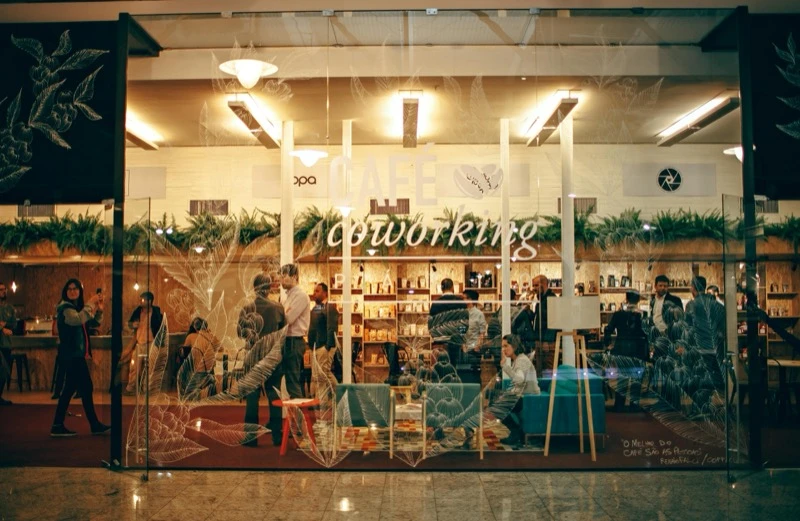
3. The third space as neutral ground. One of the most interesting patterns emerging from product teams is the use of third spaces, coworking venues, flexible offices and off-site locations, as neutral ground for cross-functional collaboration. When teams are distributed across home offices, HQ and satellite locations, a third space provides a level playing field where no one is a "remote participant" in someone else's office. Product teams have been early adopters of this model, using third spaces for design sprints, stakeholder workshops and quarterly planning sessions.
4. Asynchronous by default, synchronous by design. Product teams have mastered the art of defaulting to asynchronous communication, written briefs, recorded walkthroughs, shared documents, and reserving synchronous time for decisions, debates and creative work. This is the hybrid discipline that most organizations still struggle with: the ability to distinguish between work that requires real-time interaction and work that doesn't.
5. Outcome-based rituals. The best product teams build their collaboration around outcomes, not calendars. They come together when there's a decision to make, a problem to solve or a milestone to celebrate, not because it's Tuesday. This outcome-driven approach to togetherness is the single most important lesson product teams offer the wider enterprise: design your in-person time around purpose, not routine.
Ready to build cadence-based collaboration for your teams?
Discover how Croissant supports flexible workspace strategy.

What Product Teams Reveal About the Distributed Enterprise
Product teams have been quietly building the playbook for hybrid work for years. Their outcome-over-proximity mindset, their cadenced collaboration rhythms, their embrace of third spaces as neutral ground for cross-functional alignment: these are not just product management best practices. They are the blueprint for how the entire enterprise should work in 2026 and beyond.
The organizations that pay attention to how their product teams operate, and apply those lessons across the business, will be the ones that master hybrid work. Those that ignore the signals will find themselves chasing attendance rather than outcomes, mandating presence rather than designing purpose, and losing talent to competitors who have already figured it out.
The canary is singing. The question is: are you listening?
Product teams have proven that distributed collaboration doesn't have to mean diluted collaboration. With the right cadence, the right spaces and the right mindset, hybrid work becomes a competitive advantage rather than a compromise.
The rise of the third space, the neutral, flexible, on-demand workspace that belongs to no single team or department, is the infrastructure layer that makes this possible. It's where product teams go for their design sprints, where cross-functional squads align on strategy, and where the most important work happens: the work that requires everyone to be truly present, not just physically in the same building.
Get in touch with Croissant today to bring the product team playbook to your entire organization with flexible workspace infrastructure designed for outcomes, not attendance.
Adopt the Product Team Playbook for Hybrid Success
Product teams have been mastering distributed collaboration for decades. Let Croissant help you bring that same intentional approach to your entire organization with flexible workspace infrastructure designed for outcomes, not attendance.
- ✓ Access 800+ workspaces for intentional team collaboration
- ✓ Build cadence-based collaboration rhythms with on-demand spaces
- ✓ Use neutral third spaces for cross-functional team alignment