The Middle Manager Problem: Hybrid Work's Least-Discussed Failure Point
Why are today’s middle managers so burned out? Is my organization managing remote employees well? How can managers coordinate teams without micromanaging them? How can we spend less time organizing work and more time doing it? Hybrid was meant to bring productivity, so why is performance plateauing? Who is actually designing hybrid work in 2026? And who is the first to feel the pinch when it fails?

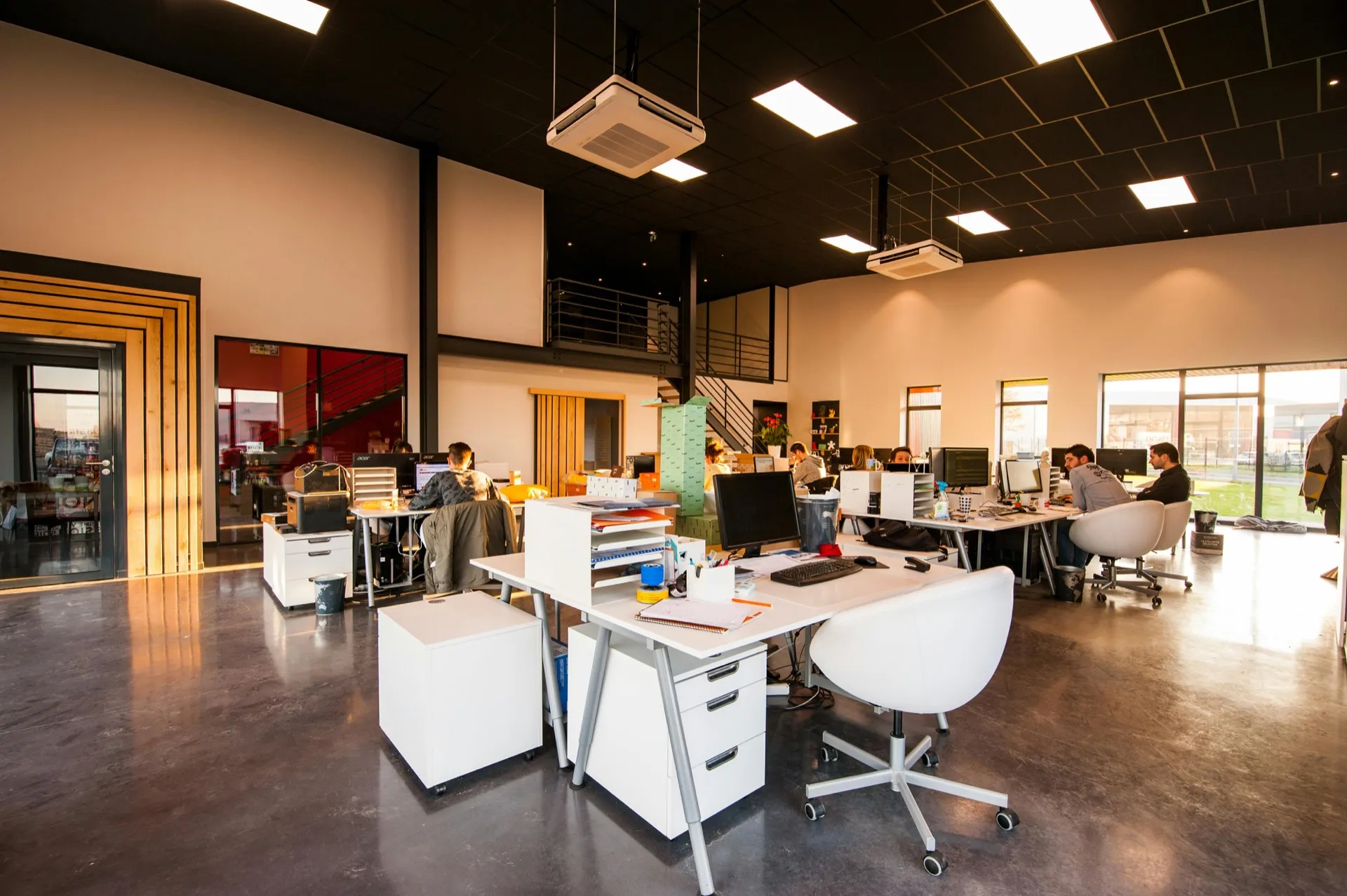
In 2026, hybrid work is undeniably the default. More than half of US employees now work in hybrid roles and less than one in ten would opt to return to the office full time.
Flexible work is not a knee-jerk policy in response to a global pandemic any more, nor is it just a perk that's offered alongside free coffee - it's a baseline expectation baked into modern work.
But being widespread doesn't mean it's working, and standard practice isn't the same as best practice.
Rigid return-to-office mandates are rising. Productivity is plateauing. Employee monitoring software is on the rise. Leaders report declining confidence in collaboration and execution. Voluntary turnover remains high, with employees citing poor management, lack of development, loneliness and weak connection as reasons for leaving.
Hybrid may be the default foundation for modern work, but cracks are forming. Many leaders adopted hybrid work quickly in the post-pandemic chaos and haven't redesigned since. Those same leaders now face a dangerous value leak hiding in plain sight.
But there's one powerful indicator all hybrid leaders should be looking to test whether their model is working or not. Who has personal insight on levels of employee trust? Who knows how often teams actually use that satellite space in the outer boroughs? Who has absorbed the task of organizing in-office collaboration days? Who is on the front lines of onboarding new hires remotely? Who knows how much ROI you're actually getting from that remote collaboration tool? Your middle managers.
Sandwiched between senior leadership and executives on the one hand, and workers and contractors on the other, middle managers translate strategy into daily execution, oversee day-to-day team performance and are responsible for task coordination and delivery - all while reporting upward and proving the value of their team against corporate goals.
As hybrid work became permanent, their job description expanded as flexibility moved control into the middle layer. Whether they chose it or not, middle managers became the default deliverers of hybrid rollout, responsible for performance, culture, retention, coordination, onboarding, and morale - and often without the authority, tools, budget or training to deliver any of them.
Your middle managers are the layer at which leadership meets the reality of work - so when hybrid working is overly improvised, unstructured, unintentional and messy, it's their problem before it's anyone else's.
As Croissant's Zoltan Szalas puts it, "middle managers are the shock absorbers of hybrid work," shouldering the emotional and logistical weight of often unclear policies, trust issues among teams, vague mandates, new technology rollouts and unsupported remote training. Join us as we unpack the most overlooked pressure point in today's hybrid organizations and the litmus test for hybrid success: the middle manager.

The Silent Fault Line: The Challenges Facing Hybrid Middle Managers
Hybrid doesn't fail because people don't want it, or because everyone needs to be in the office full-time. Did you know that less than 4% of hybrid organizations have a coherent policy to structure the way they work? Most failures in flexible work can be tracked back to management. As Croissant CEO Zoltan Szalas says, "we normalized hybrid work before we operationalized it."
Too many leaders are applying outdated management approaches to new ways of collaborating, and middle managers are paying the price. As the connective tissue between the strategizers and the doers, this layer faces unprecedented challenges from a flexible work transition which is all too often seen as a policy update rather than an infrastructural overhaul.
So let's explore the challenges middle managers face today:
1. A costly coordination tax
Hybrid work has created a whole new taskload: the need to organize around collaboration.
In the past, employees would all commute into the same central HQ, sit together and collaborate as-and-when needed. Distributed teams have soared from just 13% in 2013 to 27% in 2025. The nature of the office has shifted from one default location to a complex web of spaces: coworking labs, third spaces, home offices, regional collaboration hubs, central HQs, client entertainment spaces and international spokes.
Synchronicity is as important as ever, but now it has to be by-design rather than by default. The result? A heavy coordination tax for middle managers.
Without clear directives on how to structure hybrid work, middle managers now spend over a third of their time navigating scheduling, presence planning, asynchronous follow-ups, and miscommunication. It's on them to improvise structure independently, whether that's booking all-office days for their teams, creating new collaborative exercises and scheduling brainstorming sessions for when everyone is in HQ one day a week - on top of their regular workload.
The coordination tax is quietly absorbed, but risks canceling out the real benefits of hybrid work. "When hybrid lacks real structure, managers spend more time organizing work than actually leading it," Zoltan says. In fact, 73% of middle managers report severe stress levels, a 24% increase since 2020, and 43% are currently experiencing burnout. Data shows over half of US middle managers are currently on the look out for a new job, a higher number than individual knowledge workers. This points to an essential management layer at breaking point.
2. The widening trust gap
In 2025, we saw more return-to-office mandates, with 81% of employers acknowledging these strict new rules are driven by a lack of trust in remote productivity. At the same time, 90% of hybrid employees say they are just as productive or more productive than before.
This shows a dangerous trust gap between senior leaders and employees. Yet the task of bridging that gap falls to middle managers - who didn't design these mandates or have the authority to refine them.
The trust deficit is painfully clear in the rise of employee tracking software. In 2025, 80% of workers say their firm uses some kind of monitoring tool to keep an eye on their work. While they are intended to provide visibility, it can often lead to a sense of productivity paranoia, insecurity and a culture of surveillance that undermines the autonomy and engagement hybrid work is meant to foster.
Middle managers are caught in the middle of this chasm, trying to support both their staff and their leaders, creating friction and drag when it comes to delivering everyday tasks.
Is your hybrid model creating a trust gap between leadership and employees?
Discover how Croissant helps teams build trust through intentional collaboration.

3. Responsibility without authority
Who actually designs a hybrid work model? Policies are typically set by HR, workspace access is governed by real estate, tooling budgets sit with IT or finance, attendance mandates are set by senior leadership. Ownership is distributed, and middle managers rarely have a say.
At the same time, they're the ones responsible for maintaining performance, driving employee retention, creating culture and keeping teams engaged. They have to enforce policies they didn't set and resolve issues they aren't the cause of. All while having little to no control of the levers that shape these dynamics: budgets, headcount, workspace design, tools and mandates.
A long-standing product team member isn't meeting seniors' expectations for in-person attendance? It's their middle manager's responsibility. A new hire feels disconnected after three months' remote work? Middle managers have to onboard them better. Two departments duplicate work and disagree because they never overlap in the office? It's up to the managers to coordinate how they align. Central HQ is over-subscribed on peak days and empty the rest of the week? Managers need to stagger attendance better. The marketing team resents the new in-office mandate? Their manager is the go-between, the buffer, and the emotional support. A developer burns out whilst trying to keep up with relentless and distributed work? Middle managers need to address wellbeing.
As Zoltan Szalas explains, "hybrid work has redistributed accountability without redistributing actual power". More responsibility sits in the middle layer than ever before, but it doesn't come with strategic influence. Employee experience is proven to decline when managers have more than nine direct reports, but many managers in 2026 will be overseeing double that number.
Widening scope and responsibility without authority can force managers into constant trade-offs: negotiating exceptions instead of establishing reliable patterns, patching over problems rather than tackling them at the root and absorbing their team's gripes rather than steering them into better structures of work.
Over time, this erodes both effectiveness and trust, leaving managers stretched thin, unable to innovate with their leaders often blind to the cost to the organization.
4. Managing without a map
55% of companies reduced their office footprint last year, and are now repurposing their existing space as collaboration hubs rather than day-to-day offices. Without the guarantee of one physical space where teams reliably gather each day, middle managers also lack a guaranteed forum for connection and collaboration. It's not that culture evaporated, it just stopped being automatically and organically created.
Research shows geographically distributed teams experience much higher levels of conflict than co-located teams because of a lack of shared context. In the hybrid age, it's not guaranteed that team members will casually learn about each other's family lives in the office, their professional history, communicative styles or organizational backgrounds while making a coffee. This is proven to reduce empathy, drive misunderstanding, lower cohesion and respect and increase friction without structured intervention.
As Zoltan tells us "middle managers of hybrid teams face the task of replacing the traditional markers of in-office team membership, without a roadmap to follow."
In fact, the average US manager now spends 37% of their workweek in meetings or coordinating them - a cost that averages over $29,000 per employee annually for organizations. What's more, studies show that the majority of middle managers receive no extra training when they're promoted, and a staggering 75% received no training specifically on how to manage in a remote or hybrid environment.
Middle managers are facing a new workspace offer, new attendance mandates they have to implement, new technology and tools that govern how they work, new emotional needs within their teams - and they're having to lead without a map.
Croissant provides on-demand access to collaboration spaces so managers can focus on leading, not coordinating logistics.

The Hybrid Diagnostic Hiding In Plain Sight: How To Empower Your Middle Managers
Not seeing the ROI from distributed teams? Culture collapsing due to remote collaboration? High employee churn? If hybrid work is breaking down and you're not sure why, don't look at office utilisation, attendance data or client testimonials, look to your middle managers.
When your flexible work model is improvised and unclear, your middle layer feels it first. They're also the first ones pulled into constant firefighting by coordinating across departments, bridging gaps, absorbing emotions, planning workspace use, synchronizing schedules, and supporting employees.
This makes them the most reliable indicator of success or failure, the earliest warning light that something is broken.
But lean on them too hard, and your 'shock absorber' will no longer be able to absorb, leading to systemic failures in productivity, culture and retention. So how can we alleviate the strain on middle managers, the silent unsung heroes of hybrid work?
1. Acknowledge the hidden load. Hybrid added a dense layer of bureaucracy and emotional labor to their role. Listen to them about the unique challenges they face. Recognize their workload, name it and don't overlook this new layer as 'soft work' - it's what keeps your organization ticking.
2. Build infrastructure, not just policies. Treat your hybrid infrastructure as your most important product offering. Random mandates and weak guidelines won't create alignment, but intentional systems designed like operational infrastructure will. That infrastructure will support and guide middle managers, rather than forcing them to build without any foundations.
3. Invest in hybrid-specific leadership training. Just because someone was a great in-office manager, doesn't mean they can manage a distributed team well. Hybrid leadership is a niche skill, which managers should be given tailored coaching on, including remote trust-building, workspace utilization advice to asynchronous productivity.
4. Back accountability with authority. If managers have to own their performance and retention results, give them pockets of autonomy so they're not selling someone else's policy all the time. Whether that's over their team's working rhythms, space usage or wellbeing events, empower them with some actual power, not just responsibility.
5. Bring managers into decision-making. Considering a return-to-office mandate or a new third space offer? Bringing middle managers into the room early will guard against policies that look good on paper but fail in practice. They'll bring deep insight on points of friction, employee attitude and the actual operational reality.
6. Improve space coordination with a workplace partner. Working with an expert partner like Croissant facilitates middle-manager level autonomy by offering efficient access to right spaces for intentional in-person work so they can run collaboration on demand, not by mandate. That way they can keep their focus on leadership, not space, schedule or compliance negotiations.
7. Offer ritual and rhythm over mandates. As Croissant's CEO Zoltan Szalas argues, "hybrid works best when systems support behavior, not when behavior is shoehorned to fit systems." Rigid return-to-office policies are proven to deepen trust deficits. A one-size-fits-all attendance policy presumes that all your teams have the same workspace needs. Teams need reliable structures that fit the ways they work best, rather than orders that tell them how to work.
Organizations that succeed at hybrid work in 2026 will be those that see their middle managers as the linchpin of a distributed workforce and a valuable frontline indicator of its performance - not a buffer for broken systems. Get in touch today to explore how Croissant could free your middle managers from bureaucratic burdens and drive long-term trust.
Free Your Middle Managers from the Coordination Tax
When hybrid lacks structure, managers spend more time organizing work than leading it. Croissant provides the workspace infrastructure that empowers managers to focus on people, not logistics.
- ✓ Access 800+ workspaces for on-demand team collaboration
- ✓ Reduce coordination overhead with flexible space booking
- ✓ Build predictable collaboration rhythms that support middle managers