
Beyond HQ vs. No HQ: Why Culture Strategy Now Starts With Workspace Design

What is work culture and how is it created today? Is it about organizational structures? Is it about how you dress in the workplace? Is it trickled down from the philosophy of your CEO or is it generated by the workforce itself? Is it a sense of belonging? Can it be found in a good pay package or Christmas bonus? Or is it built at that team building lunch? Is it about values? Or how you talk to your leaders?


Team collaboration in a modern coworking space


Let's go back in time and look at how work culture has evolved.

In the early 1900s, when factory work soared, culture was about high productivity, predictable product outcomes, with strict hierarchy and rules for employees that flocked to cities for work. Huge factory floors with supervision platforms reinforced the dominant culture of structure, productivity and conformity.

From 1930 onwards, we see the rise of 'professional' culture as white-collar work gained prestige. Offices became status symbols, with corner offices for executives for the first time. Culture manifested itself in codes of conduct, whether that's suit wearing, office manners, the introduction of titles and management structures. In this era, culture means order, formality and predictability.

From 1950 onwards, the post-war economy demanded creativity and speed, as managers realized their workers delivered more when they felt connected. The rise of the meeting room and the use of the telephone meant work culture became less formal and more social. In these years of economic optimism, culture was created through communication and creativity.

From the 1970s, a rise in corporate competition meant companies valued knowledge workers and professional experts. The introduction of cubicles gave rise to individualization, while the first personal computers and early digital tools emphasized solo productivity. Culture shifted towards individual knowledge and expertise.

In the 90s, the internet boom saw young companies wanting to break from tradition. Culture became a branding tool for speed, creativity, and flat corporate structure. Open office plans and a lack of hierarchy gave rise to a culture of innovation and informality. For the first time we see beanbags and game rooms in the workplace - as culture became a signal of disruption.

By the 2010s, a growing focus on wellness, inclusion and identity had transformed large-scale corporate culture again. Greater expectations from workers drove culture more into the domain of lifestyle, community and belonging, with new gyms and meditation rooms in the office.

Then comes the 2020 pandemic, where the culture of work turned on its head. Kitchens became offices, living rooms became conference rooms, the professional and private blended as digital presence replaced physical visibility. The workplace became improvised, autonomous and unknown, and companies had to pivot at pace to preserve their culture.

There's a common thread here. Culture isn't created in a vacuum - it's the product of its time. New technologies, economic shifts, politics, leadership styles and employee expectations play their role, but in each of these eras it's undeniable that the physical work environment shapes work culture.

The greatest tool in culture building? Space. Whether that's the vast factory floors that upheld strict hierarchies, the banking cubicle which ensured solo productivity, or the office-meets-lounge that's become the hallmark of startups worldwide.

We think of 'culture' as the domain of the office manager, HR leads, or Heads of People. But with space and culture undeniably tied, it's the real estate leaders who are the first cultural generators - whether they want that role or not.

Join us as we break down why CRE decisions now determine the health of your organization's culture more than most HR memos, wellbeing programmes or mission statements - and how to approach your portfolio with hybrid work infrastructure as an organizing principle.

Why cultural strategy is a spatial strategy

If your physical environment isn't designed for how work actually happens today, it becomes an active obstacle to culture, not a container for it.

A staggering 81% of office workers say they're frustrated with their current office experience - and the national office vacancy rate has hit its highest level since 1993 - showing a breakdown in culture as a result of space.

Real estate choices are proven to determine cultural cohesion, innovation velocity, mentorship quality, talent retention, collaboration patterns and overall productivity.

It's no wonder then that today's hybrid work era has brought challenges for real estate teams in modern companies. Hybrid work didn't just disrupt office attendance; it shattered cultural architecture as a whole. Suddenly, the central office where everyone worked was no longer the default place where culture was produced.

The workspace has fragmented, and culture must now be embedded within HQs, the provision of satellite offices, regional hubs, a coworking offer and even in the digital home office.

You might think this diminishes the role of CRE in culture, but it actually raises it. Across millions of hours of logged activity, over 70% of Croissant's users book spaces for team collaboration, not solitary work. Offices have become high-value hubs of interaction rather than the location of the default daily grind.

In the hybrid work environment, the office may not mean what it used to, but workspace design still dictates who has access to leaders, where and how collaboration happens, how decisions are made, whether meetings are inclusive, how safe employees feel. Whenever space changes, culture changes. When culture feels broken, space is often the culprit.

Culture is no longer location-dependent. It's infrastructure-dependent. As we shift towards paying for outcomes rather than space, the decisions real estate leaders make are more culturally significant than ever.

But all too often, organizations respond to the hybrid era with ad-hoc WFH rules, untargeted stipends, a central HQ that sits largely empty, and generic office layouts that weaken rather than generate culture.

Outdated CRE formulas could be the blind spot of the decade - bringing unnecessary cost, poor employee retention and cultural decay.

Design your workspace for culture, not just presence

See how Croissant helps real estate leaders build outcome-based portfolios with access to 1,200+ workspaces worldwide.

Explore Team Plans
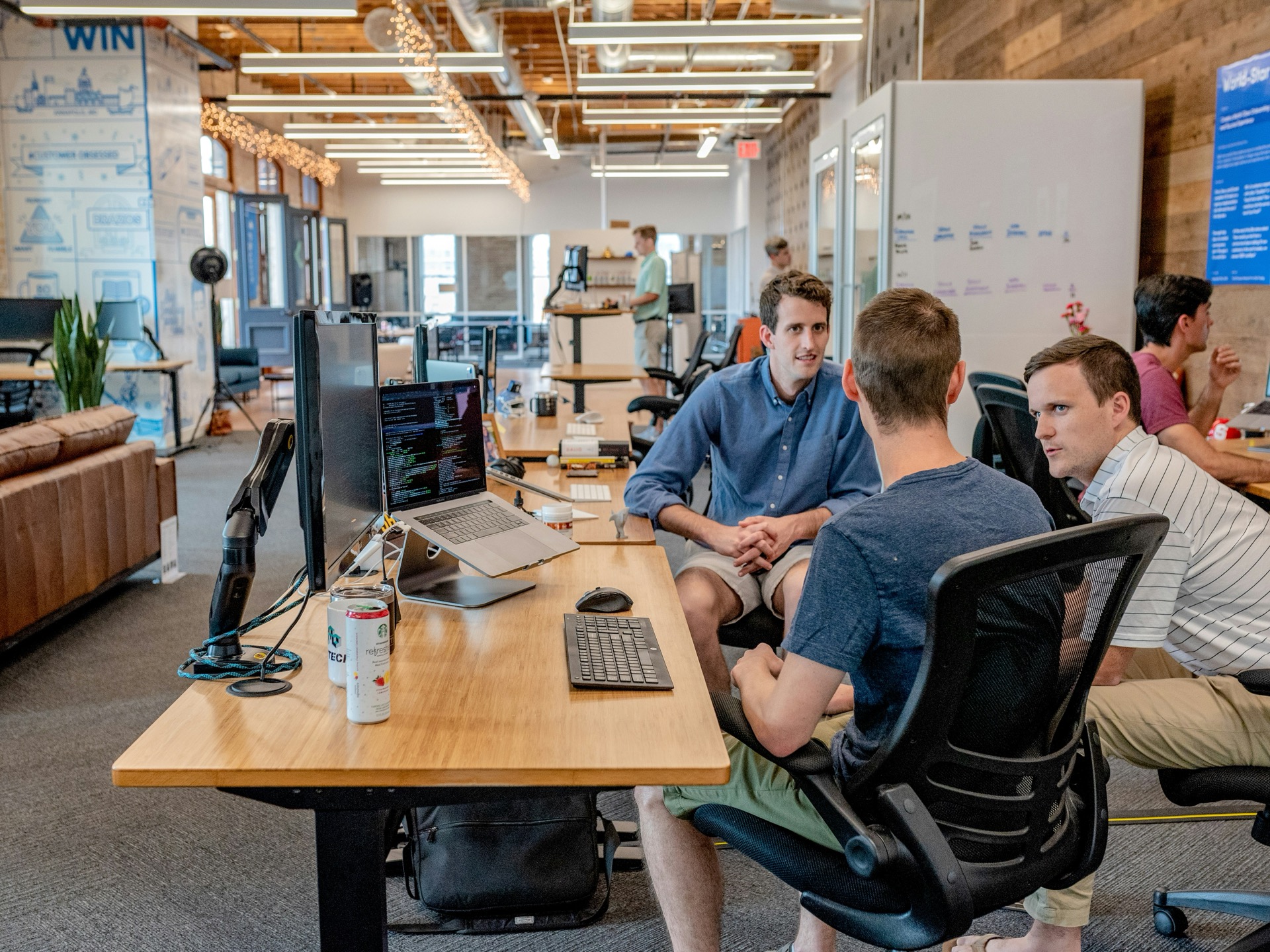

Developers collaborating in a modern workspace

The new office value proposition: social not spatial

Today's employees don't ask whether they have an office, they ask what they get out of showing up there. The modern office adds value when it becomes a physical manifestation of company ethos, an enabler of collaboration, a space for identity and community building - in other words, a culture generator.

This doesn't come in one form: it could be an optimized central HQ, a room in a flex space where R&D teams gather, a downsized client-facing hub or a weekly co-working meetup. The space itself isn't the point here - because the hybrid workspace is social rather than spatial. It's about purpose rather than presence.

If you find yourself asking 'do we still need an HQ in 2026?', you're asking the wrong question. The real ask should be 'what portfolio of spaces will drive the cultural outcomes we're looking for?' It's time to look beyond the black and white question of office vs home, HQ vs remote - and instead embrace a new definition of the workplace as part of the hybrid cultural infrastructure.

Companies that miss this shift will spend the next decade repairing avoidable cultural and financial damage. So why are so many companies failing?

Where we go wrong: workspace as the unintentional cultural bottleneck

CRE policy paralysis comes at a cost. So what are the features of failure when it comes to workspace portfolio design?

1. Stipends without strategy

Many firms fall into the trap of keeping their RE portfolio exactly the same, but rolling out a coworking stipend and calling it flexible work. Without a holistic strategy, this doesn't create flexibility, it creates chaos. Croissant data shows that only a staggering 4% of businesses are shaping their hybrid work offer with a strategic policy - leading to high employee attrition rates, a vendor overload for HR teams and zero cultural cohesion.

2. The myth of the central HQ for a distributed workforce

The sense that a single HQ can sustain a corporate culture is out of date. It may have made sense for the factory floor and the mega tech campus, but today's workforce is distributed, hybrid, and autonomy-driven - so the old rules simply don't apply. 94% of workers say flexibility improves their lives, making a single, central location a cultural liability, not a cultural anchor. Instead, modern organizations need a multi-node ecosystem, a diverse portfolio of space offerings that each serve critical cultural functions - cohesion, collaboration and identity building.

3. Visibility inequality

A top concern flagged by hybrid employees is lower visibility to leaders, which can lead to proximity bias and actively undermine efforts to build an inclusive culture. An unequal workforce or an ineffective DEI strategy is a clear feature of failure. The physical ecosystem must actively mitigate the 42% visibility gap concern for remote workers. If your spaces aren't suitable for your hybrid workforce, are simply too far away from where employees actually live, or lack collaborative open space, equitable culture is compromised, along with staff retention.

4. Vendor fragmentation

A hallmark of your workspace strategy becoming a cultural bottleneck is a pile-up of vendor relationships and contracts for HR to navigate. Those that see hybrid as a perk rather than critical infrastructure often face high administrative costs, because their employee offerings aren't part of a thoughtful, unified and holistic offering. A new videoconferencing software, third space offering and cybersecurity deal might be rolled out by separate siloed leaders, with the cost of maintaining those relationships all falling to an overworked office manager, resulting in a poor employee experience in the end.

5. High employee churn

When managed well, hybrid work - with the appropriate workspaces built in - is proven to lower resignations by a third. On the other hand, poorly executed hybrid strategies lead to high churn: 41% of employees considering quitting cite low psychological safety which workspace is fundamental to. The correct investments in hybrid-ready spaces embeds value long after the keys are handed over in the form of long-term employee loyalty.

6. Poor sustainability credentials

A lack of consideration of sustainability in your workspace design is increasingly linked to low adoption of hybrid policies or RTO schemes. Almost three quarters of organizations now say they are prepared to pay extra to take on workspaces with leading sustainability credentials, and over 70% of millennial workers now actively seek out more environmentally friendly office options. More companies than ever are realizing that environmental credentials attract talent and contribute to cultural identity.

7. Faith in the 'accidental watercooler collision' approach

Many CEOs mourn the loss of the spontaneous 'watercooler moment' where inspiration, collaboration and connection may once have been found. Some are trying to resurrect it through RTO policies, forcing their employees into one place in the hope these unplanned encounters spontaneously create culture. In fact, Croissant's data shows that 70% of distributed teams report that their most valuable collaboration is scheduled, intentional, and purpose-driven. Distributed teams don't lack culture because they lost random collisions, but because their workspace offer doesn't allow for structured flexible gatherings and intentional co-working. Real estate teams can now design for these engineered collaboration moments as a driver of true culture.

Enable intentional collaboration for your distributed team

Give your workforce access to 1,200+ spaces designed for team gatherings, offsites, and purposeful collaboration.

Remote worker using mobile phone in a flexible workspace

Building a new cultural infrastructure through CRE: the new flexible formula

It's time to see hybrid work as part of your critical infrastructure, not a passing trend. This means culture is no longer born in a single building, but from the interaction of multiple workspace offerings within an intentional CRE strategy. This strategy must be optimized for the cultural outcomes that a distributed workforce relies on to stay happy, healthy and productive.

The most successful CRE leads are exploring capital reallocations. Rather than sinking funds into the operational cost of traditional HQ spaces that then go unused, the winners are redirecting capital towards infrastructural updates that maximize the utility of space as a culture driver - whether that's embedding technology in your existing office, scrapping desk space in favor of collaborative rooms or downsizing your HQ in favor of satellite flex nodes. Failing to rightsize your CRE footprint could risk locking away capital that could otherwise be deployed powerfully to enhance the employee experience.

With the rise of the diversified CRE portfolio, what makes up your workspace offer? Introducing the four potential components of your new cultural infrastructure:

1. The flagship HQ

This becomes a center for cultural events, high-value collaboration, building the identity of your brand and ensuring equitable exposure to leadership.

2. The local micro-hub

This unlocks neighborhood-based collaboration, boosting autonomy and encouraging self-organization. It also brings financial and psychological relief from the commute, creating time for wellbeing and personal development activities like sports or language classes.

3. The third space

These build culture by enabling intentional gatherings in bespoke spaces - whether that's an onboarding day for new hires or a weekly drop in with HR. They bring a high-degree of flexibility, the opportunity to use specialized spaces, or empower regional concentrations of the workforce.

4. Solo flexibility

The need for individual work days shouldn't be overlooked in the drive to build community and culture. The home office should be factored into your offering, as you still need to equip your workers with the cultural infrastructure to do their jobs effectively outside of the spaces you provide.

As the role of corporate real estate moves away from asset provider to outcome provider, you need to find a blend of these components that reflects how your workforce actually works. Fixed HQs and flex spaces aren't mutually exclusive, they can actually be highly complementary.

It's no surprise we're seeing a rise in highly agile spaces that feature movable walls, usage-based floorspace adjustments, real-time occupancy sensing and multi-purpose rooms - so design can flex with behavior.

But outcome-based workforce design is impossible without a rich data layer. Some CRE leaders base their decisions on blunt data about the number of employees that enter the office each day, which simply isn't a good enough measure of how spaces are being used and their contribution to your culture.

A workspace provider like Croissant can help you unlock a whole new generation of utilization benchmarks: collaboration velocity (how many times a month employees gathered to collaborate), spatial utilization (of particular office regions) or spatial virality (whether employees repeatedly bring others into certain spaces in your portfolio). As we move towards a blended workspace model, this level of insight becomes the foundation of evidence-based portfolio decision-making.

Whether they like it or not, real estate heads are early cultural leaders. Failing to adapt to this role as a cultural powerhouse could risk wasting millions in static assets, losing talent to more flexible competitors, reinforcing inequity, slowing innovation and compromising on core values.

Those that seize the opportunity by building agile multi-node ecosystems, using data to anticipate needs rather than defaulting to assumptions, and partnering with HR as equals will make themselves invaluable by providing a workspace that's an essential cultural instrument.

Get in touch today to explore how Croissant could help you build a hybrid-first portfolio for cultural excellence in 2026.


Friends collaborating in a coworking cafe space


Build Your Hybrid-First Workspace Portfolio

Ready to transform your workspace strategy into a culture driver? Croissant's network of 1,200+ spaces and data-driven insights help you design a multi-node ecosystem that supports collaboration, belonging, and productivity across your distributed workforce.

  • Access flagship HQs, local micro-hubs, and third spaces in one platform
  • Get utilization data to optimize your portfolio for cultural outcomes
  • Enable intentional collaboration with flexible workspace access